UFC Odds Today: Current Fight Lines and Market Movements
 Available in US
The global MMA betting handle reached $10.3 billion in 2024, a 17 percent rise on the previous year. That growth means more money flowing into UFC odds markets, sharper lines, and faster corrections — but also more opportunities for bettors who understand the rhythm of how and when lines move.
Sportsbook Opening Lines: Tracking UFC Fight Week Odds Shifts
UFC odds at UK bookmakers typically appear within hours of a fight being officially announced, though the timing varies by operator and by the profile of the fight. Main event and pay-per-view matchups attract lines fastest — sometimes within minutes of the announcement on social media. Preliminary card fights and Fight Night undercard bouts may take a day or two to appear, and some operators only price them once the full card is confirmed.
Opening lines are set by the bookmaker’s trading team based on their internal models, which incorporate fighter records, historical performance metrics, and market expectations. These opening prices are the rawest form of the odds — they have not yet been tested by public or sharp money, which means they are the most likely to contain errors. For the bettor, opening lines represent the widest window of potential value. The earlier you assess a line after release, the better your chances of finding a price that the market will later correct in your favour.
Not all opening lines appear simultaneously across operators. Different bookmakers post their UFC odds at different times, which creates a brief window where you can compare the early movers’ prices against your own assessment before the rest of the market follows. I keep a list of which UK operators post UFC odds first and check them within the first hour of release. The edge is small and time-sensitive, but it is real.
Fight Week Odds Movement
The most dramatic odds movement on UFC fights occurs during fight week — the five to seven days before the event. This is when the majority of betting volume arrives, when fight-specific news (injuries, weight-cut updates, training camp footage) enters the public consciousness, and when sharp bettors who have been waiting for their price begin to act.
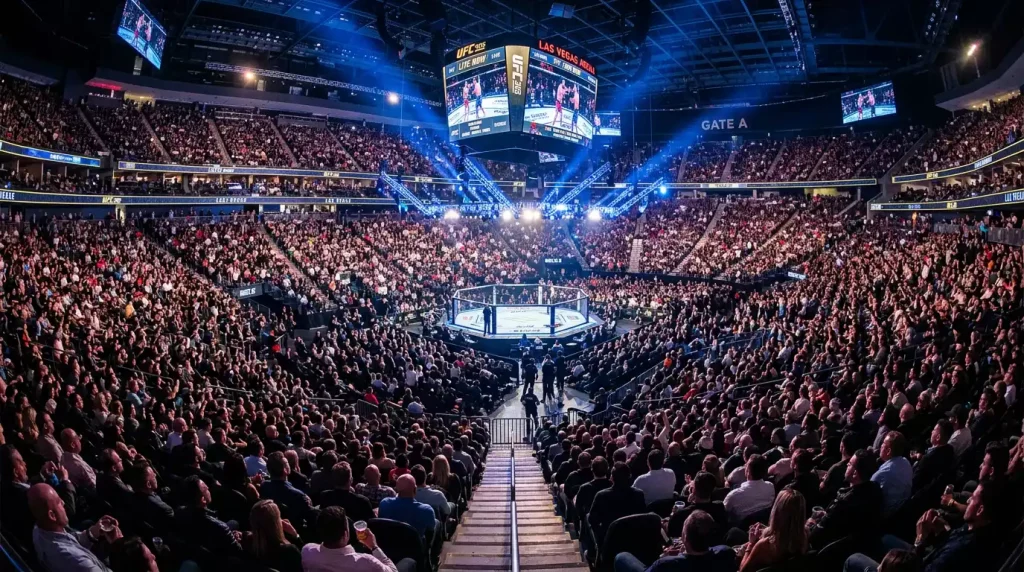
A useful case study in line movement: at UFC Vegas 110, odds on the Dulgarian-Del Valle fight moved from -250 to -154 on the favourite — a shift that reflected significant money arriving on the underdog side and suggested that informed bettors saw something the opening line missed. That kind of movement is not subtle, and it happens on UFC cards with some regularity. The question for the bettor is not whether the line is moving, but what the movement tells you about where the smart money is landing.
Fight week also brings weigh-in data, which can trigger sharp movement in the final 24 hours before a fight. A fighter who looks visibly drained at the weigh-in — gaunt face, sluggish movement, clearly struggling to make weight — is a different proposition than one who steps on the scale comfortably. The market does not always price weight-cut information efficiently, particularly on undercard fights where the weigh-in footage receives less attention.
Reading Current Lines Across UK Bookmakers
At any given moment, the odds on a UFC fight will differ across UK bookmakers. This is not a glitch — it reflects differences in each operator’s pricing model, their exposure to money already placed, and their willingness to hold positions that differ from the market consensus. The average bookmaker margin on major UFC fights sits at roughly 4 percent, but that margin is distributed differently across operators, and the best available price on any given fighter is often meaningfully better than the average.
Odds comparison is the single most impactful habit a UFC bettor can develop. If the best price on Fighter A is 2.20 at one bookmaker and 2.00 at another, taking the 2.20 gives you an additional 10 percent on every winning bet for zero additional risk. Over hundreds of bets, that difference compounds into a substantial improvement in long-term returns. I use odds comparison tools that aggregate UFC prices across multiple UK operators in real time, and I never place a bet without checking at least three bookmakers first.
The operators that consistently offer the best UFC odds are not always the biggest names. Some smaller UK-licensed bookmakers compete on MMA pricing specifically to attract a niche audience, offering tighter margins on UFC events than on football or horse racing. It is worth opening accounts with multiple operators and checking where the best value sits for each fight individually rather than defaulting to a single bookmaker.
What Line Movement Tells You
Line movement is the market’s collective voice. When odds shorten on a fighter (move from 2.50 to 2.20, for example), it means money is arriving on that side faster than the bookmaker can balance it. When odds drift (move from 2.50 to 2.80), money is flowing the other way. Neither direction is inherently good or bad for the bettor — what matters is understanding why the line is moving and whether the movement reflects information you agree with.
Sharp money moves lines early. Public money moves lines late. A line that shifts significantly in the first 48 hours after release, before any major news has broken, is almost certainly being driven by informed bettors who have identified a pricing error. A line that shifts dramatically on the day of the fight is more likely driven by public money reacting to media coverage, social media hype, or late-breaking news. The early movers are usually right. The late movers are a mix.
Reverse line movement — where the line moves in the opposite direction from the majority of public bets — is the most interesting signal. If 70 percent of bets are on Fighter A but the line moves toward Fighter B, it means a smaller number of larger, sharper bets are outweighing the public volume. This pattern does not guarantee that Fighter B will win, but it tells you that informed money disagrees with the public consensus, which is worth noting. For a deeper understanding of how odds work and what implied probability means in practice, the odds explained guide covers the mathematical foundations in detail.
The Odds Are the Story
Every UFC odds line is a narrative told in numbers — who the market thinks will win, how confident it is, and how that confidence changes as fight night approaches. Learning to read that narrative is not a substitute for fight analysis, but it is a complement that reveals what the rest of the market sees and where it might be wrong. Check the odds early, check them often, and compare them everywhere. The line is always talking. The question is whether you are listening.
When do UK bookmakers release odds for upcoming UFC fights?
Most UK bookmakers release odds for UFC main events and pay-per-view fights within hours of the official announcement, sometimes within minutes. Undercard and preliminary fights may take one to two days to appear. The timing varies by operator — some bookmakers are consistently faster than others, and those early lines often represent the best value before the market corrects.
What does it mean when UFC odds shift significantly during fight week?
Significant odds movement during fight week usually indicates that large volumes of money are arriving on one side of the fight. Early-week movement is typically driven by sharp bettors who have identified a pricing error. Late-week movement is more often driven by public money reacting to media coverage or news such as weigh-in results. The direction and timing of the movement help you assess whether the new price is better or worse value than the original.
This material was created by the OCTAEDGE team.
Related posts

Young People and MMA Gambling in the UK: Statistics, Risks, and Protections

UFC Betting Cash Out: How Early Settlement Works and When to Use It