UFC Method of Victory Betting: High-Value Proposition Odds
 Available in US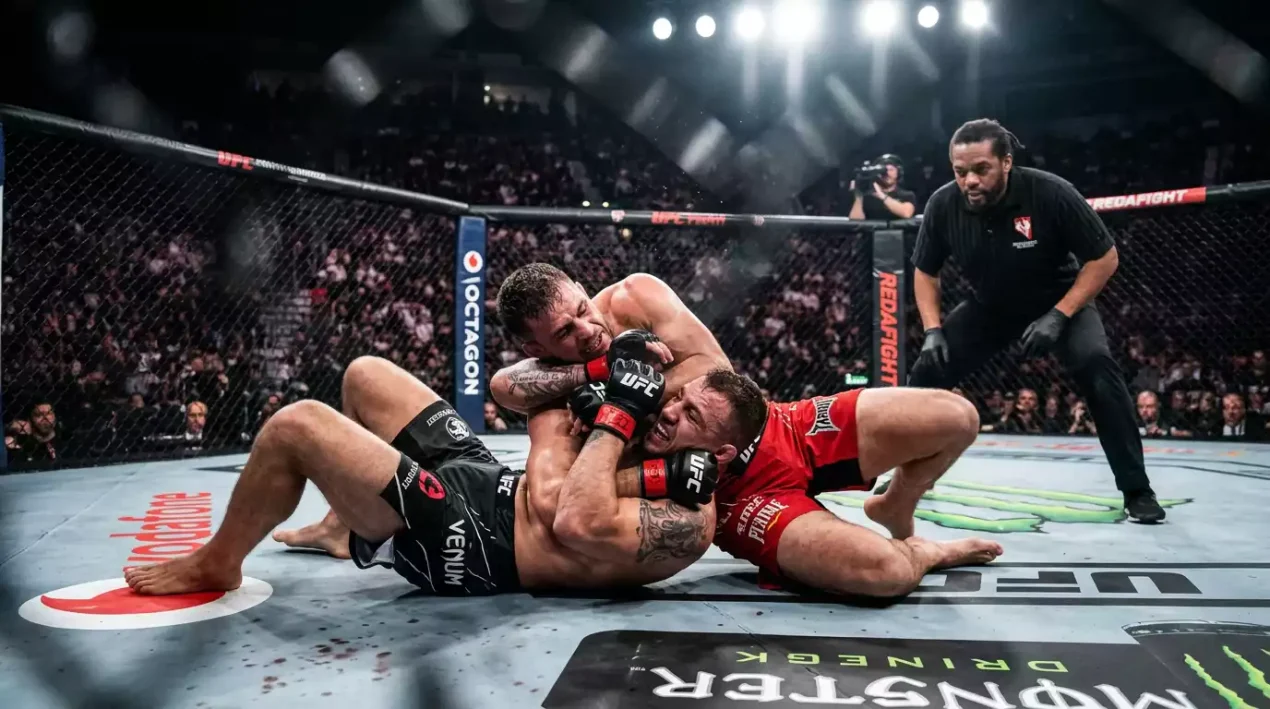
About half of UFC fights in 2025 ended by judges’ decision, with the other half split between knockouts and submissions. That baseline distribution is the starting point for everything in this guide — understanding how the market prices each outcome and where the errors tend to cluster.
KO/TKO Prop Wagers: Finding Value in UFC Finish Rates
Knockout and TKO are grouped together in method of victory markets because the distinction between them is often subjective — a referee stoppage due to unanswered strikes (TKO) and an unconscious fighter hitting the canvas (KO) both settle the same way on the bet slip. The combined KO/TKO market is typically the most liquid and most efficiently priced of the three main methods, because knockouts are the outcome the public watches for, talks about, and bets on.
That efficiency is a double-edged sword. Because the public loves knockouts, the market tends to slightly overprice KO/TKO in fights featuring popular power punchers. A fighter known for highlight-reel knockouts draws disproportionate KO/TKO money, which pushes the odds down and reduces the value. Conversely, the KO/TKO line for less well-known fighters — or for fighters whose knockout power is genuine but not marketable — can drift to prices that understate the real probability.
The key variable is knockout rate relative to opposition quality. A fighter who has knocked out five of their last six opponents looks devastating, but if those opponents had a combined significant strike defense below 45 percent, the knockouts say more about the level of competition than the fighter’s power. When that same fighter meets an opponent with 60+ percent strike defense and a granite chin, the KO/TKO probability drops sharply — but the market, anchored to the recent record, adjusts slowly.
The Submission Market
Submissions are the most underpriced method of victory in UFC betting, and the reason is simple: the public does not understand grappling as intuitively as it understands striking. A knockout is visible and immediate. A submission develops over seconds or minutes through positional transitions that most viewers cannot follow in real time. That lack of visual clarity translates into less public money on submission outcomes, which means the bookmaker does not need to shade the line as aggressively, and value persists.
The fighters most likely to generate submission finishes share a specific profile: high control time, high submission attempt rate, and opponents with poor positional awareness on the ground. The submission market rewards patience — not every grappling-dominant fighter finishes fights, and many submission specialists win by decision because they control position without finding the neck or the arm. The sweet spot for value is a grappling specialist facing an opponent who has been submitted before or who tends to give up their back when pressured on the mat.
One pattern I have found consistently profitable: when a fighter coming off a submission loss faces another grappler, the submission line on the second fight is often shorter than it should be because the market assumes the fighter has “learned their lesson” and will defend better. Submission defense does not improve that quickly. The vulnerabilities that led to the first submission are usually still present, and the market’s optimism creates pricing inefficiency.
The Decision Market
Decision is the default outcome in MMA — when neither fighter finishes the other, the fight goes to the judges. Given that roughly half of UFC bouts end this way, the decision market should theoretically be priced close to a coin flip as a baseline. In practice, it is priced inconsistently, with significant variation based on how the public perceives the fighters involved.
Fights between two technical, defensively sound fighters with low finishing rates almost always see the decision market underpriced. The public wants action, the narrative around the fight emphasises the potential for a finish, and money flows toward KO/TKO and submission, leaving the decision at a price that overstates the probability of a finish. These are the fights where the boring bet is the smart bet.
The opposite applies to fights hyped as “guaranteed wars” between two aggressive finishers. The public overloads the finish markets, and the decision drifts to a generous price. The reality is that two aggressive fighters sometimes neutralise each other — they fight cautiously because they respect the other’s power, or the grappling exchanges slow the pace, or one fighter suffers an early injury that turns the bout into a survival exercise. Decision at 4.00 or higher in a fight the public assumes will end early is a recurring value opportunity.
Finding Value in Method of Victory Odds
The average bookmaker margin on major UFC fights is about 4 percent on the moneyline. On method of victory markets, the margin is typically wider — 6 to 10 percent — because the outcomes are harder to price and the volume is lower. That wider margin means you need a bigger edge to be profitable, but the inefficiencies are also larger because fewer sharp bettors compete in these markets.
My approach to method of victory betting starts with a simple framework: estimate the probability of each method based on the fighters’ profiles, compare those probabilities to the implied probabilities from the odds, and bet only where the gap exceeds the margin. If I think a submission is 20 percent likely and the odds imply 12 percent, the gap is 8 percentage points — well above the margin, and worth a bet. If the gap is 2 percentage points on a market with a 7 percent margin, I pass.
The method of victory market also interacts with the moneyline in ways that create arbitrage-adjacent opportunities. If the moneyline heavily favours Fighter A but the method of victory market prices Fighter A’s KO/TKO, submission, and decision at odds that sum to a lower implied probability than the moneyline implies, one of those method markets is offering value by definition. Cross-referencing the two markets is a habit that has improved my method of victory betting more than any other single technique. For a broader overview of all UFC wager types and how they fit together, the betting markets guide covers moneyline, rounds, props, and accumulators alongside method of victory.
The Market Within the Market
Method of victory betting is the closest thing MMA offers to a niche within a niche. The moneyline gets the volume, the round markets get the degenerates, and the props get the casual punters. Method of victory sits in the gap — technical enough to deter most recreational bettors, liquid enough to allow meaningful stakes, and inefficient enough to reward anyone willing to do the analytical work. It is not where I place the majority of my bets. It is where I find the majority of my value.
What counts as a TKO vs a KO in method of victory betting?
In UFC method of victory markets, KO and TKO are grouped together and settle the same way. A KO is when a fighter is rendered unconscious by a strike. A TKO is when the referee stops the fight due to unanswered strikes, a corner stoppage, or a doctor stoppage. Both outcomes pay out as KO/TKO on the bet slip. The distinction matters to the record books but not to the settlement of your wager.
Are decision bets good value given that roughly half of UFC fights go to the judges?
Decision bets can offer strong value when the market underestimates the likelihood of a fight going the distance. This typically happens in fights between two defensively sound fighters with low finishing rates, where the public expects a finish based on hype rather than analysis. If the base rate for decisions is close to 50 percent and the market prices it at 40 percent implied probability, the decision bet is offering genuine value.
This material was created by the OCTAEDGE team.
Related posts

Young People and MMA Gambling in the UK: Statistics, Risks, and Protections

UFC Betting Cash Out: How Early Settlement Works and When to Use It