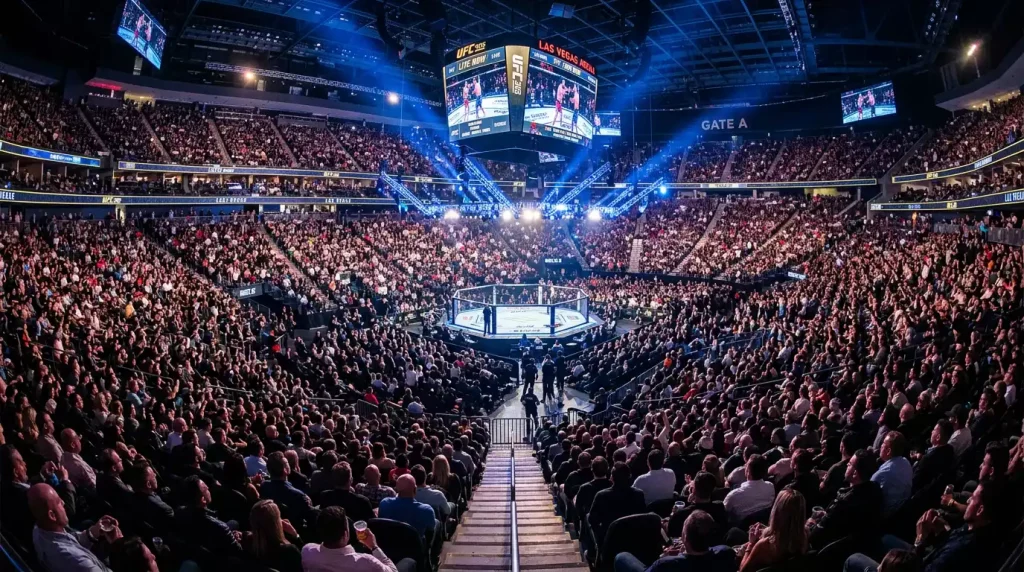
UFC Live Betting: Real-Time In-Play Fight Odds and Cash-Outs
 Available in US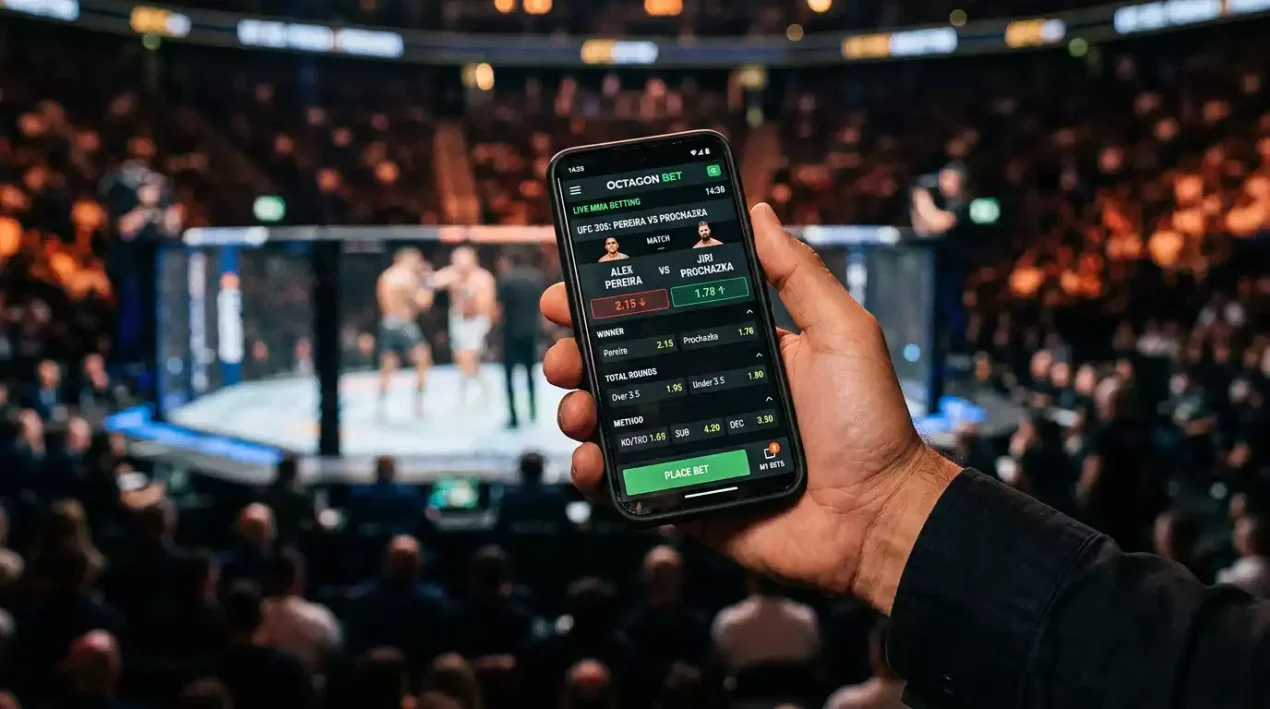
To capitalize on shifting momentum between rounds, punters should utilize platforms that offer reliable UFC live streaming alongside their in-play markets.
In-Play Mechanics: Placing Real-Time Bets on UFC Fights
Pre-fight betting closes when the referee says “fight.” From that point, the bookmaker’s algorithms take over, recalculating odds every few seconds based on what is happening inside the cage. Land a hard right hand? The odds shift. Score a takedown and hold top position for thirty seconds? They shift again. Every significant strike, every clinch, every scramble feeds into a pricing model that tries to keep up with the chaos.
In practice, most UK bookmakers suspend their live MMA markets during active exchanges — when both fighters are throwing combinations or grappling intensively, the system cannot price accurately enough, so it locks. Markets reopen during lulls: when fighters reset at range, when the referee stands them up, and most reliably between rounds. Those inter-round windows, typically sixty seconds for non-championship bouts, are where the bulk of in-play MMA betting actually happens. You get a breather, the corner advice plays out on screen, and the odds reflect the story of the round just finished.
The odds you see between rounds are not just a reaction to who landed more. They factor in visible damage — cuts, swelling, body language — as well as the scoring implications. A fighter who lost round one but showed a dangerous submission attempt in the final minute will not see his odds collapse as sharply as someone who was dominated on the feet for five minutes straight. The algorithm is blunt, but it responds to the same cues an experienced viewer would notice.
One thing I have learned to respect: the in-play line is often sharper than the pre-fight line. By the time a fight is live, the opening-line value has been squeezed out. What remains is a pricing game driven by information that is unfolding in front of everyone simultaneously. That means your edge, if you have one, comes from interpreting what you see faster or more accurately than the model does — not from having secret knowledge.
Live Markets Available During UFC Fights
The market menu shrinks once a fight goes live. Pre-fight, you might see fifteen or twenty options on a main-card bout — moneyline, method of victory, exact round, over/under rounds, fight to go the distance, various props. In-play, most bookmakers pare that down to three or four core markets, because pricing exotic outcomes mid-fight is computationally difficult and commercially risky.
What stays available is the moneyline — who wins. That is the backbone of live UFC betting, and it is where liquidity concentrates. Some operators also keep the over/under rounds market open, adjusting the line as each round passes. If a three-round fight reaches the halfway mark of round two without a finish, the “over 2.5 rounds” line will have shortened considerably from its pre-fight price, reflecting the decreasing probability of a stoppage.
Roughly half of UFC bouts in 2025 ended by judges’ decision, with the rest split between knockouts and submissions. That near-even split matters for live bettors because it means finishes can come at any moment, in any round. A fight that looks like a clear decision through two rounds can end with a single punch in the third. The in-play moneyline reflects that uncertainty, which is why you will rarely see a live favourite priced at odds that imply 95 percent certainty — the finish threat keeps the underdog’s odds alive far longer than in sports with more predictable scoring patterns.
Method of victory, when it is offered live, tends to appear only between rounds and with wider margins than pre-fight. I have seen bookmakers pull it entirely after the second round of a three-round fight because the remaining pricing window is too narrow. If you want to bet on a specific finish type during a fight, you need to be ready to act the moment that market reopens.
Cash Out and Partial Cash Out in MMA
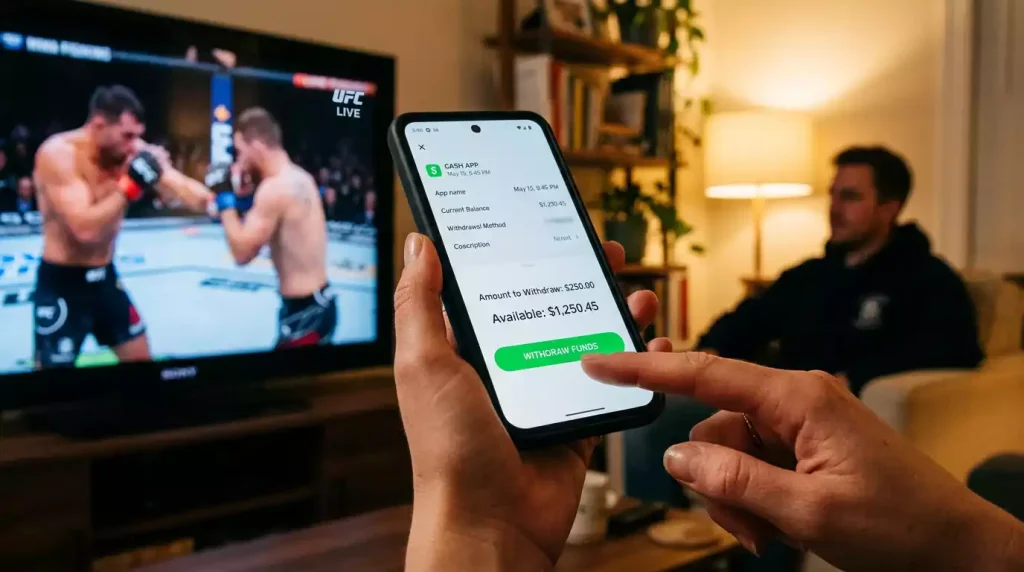
Cash out is one of those features that sounds like a safety net until you understand who holds the scissors. The idea is simple: your bet is live, the fight is going well, and the bookmaker offers you a guaranteed return right now instead of waiting for the final result. You can take the money and walk away, or you can let it ride.
The catch — and there is always a catch — is that the cash-out offer is not the fair market value of your position. It is the bookmaker’s estimate of your bet’s value minus a margin. That margin is how the operator profits from offering you early settlement. In my experience, the gap between the cash-out price and what you would get by laying off the same position at true odds runs between 5 and 15 percent, depending on the operator and how volatile the fight is at that moment.
Partial cash out lets you lock in profit on a portion of your stake while leaving the rest active. If you backed a fighter at 3.00 pre-fight and they are now the clear favourite at 1.40, you might cash out half your stake to guarantee a return and let the other half run for the full payout. It is a decent middle ground when you are ahead but not confident enough to let everything ride.
Here is where I will be direct: cash out is a tool for managing risk, not for maximising expected value. Every time you cash out, you are accepting a price that is structurally worse than the market probability. If you find yourself cashing out habitually — on every fight, win or lose — you are handing the bookmaker an extra edge on top of the margin already built into the odds. Use it when the situation genuinely warrants it, not as a default.
Timing, Latency, and Risks of Live Betting
There is a half-second lag between what you see on your screen and what is actually happening in the cage. Depending on your broadcast source, it might be closer to three or four seconds. That delay is not a minor detail — it is the central risk of live MMA betting. A fighter can be knocked unconscious in the time it takes for the streaming feed to catch up to reality. You place a bet thinking your fighter is in control, and by the time the server processes your wager, they are already on the canvas.
Bookmakers know this, and they build protections into their systems. Most operators impose a brief acceptance delay on live bets, typically one to five seconds, during which the system checks whether the odds have moved. If they have, your bet is either rejected or offered at the new price. This is not the operator cheating you — it is a structural necessity. Without it, anyone with a faster video feed could exploit the lag systematically.
The practical advice is straightforward. Do not chase. Live MMA betting creates a powerful emotional feedback loop: you watch the action, you feel the momentum, and your brain tells you to act now before the opportunity disappears. That urgency is partly real — odds do move fast — but it is also partly manufactured by the adrenaline of watching a fight. The bets I regret most in six years of doing this were all live bets placed in the heat of the moment, not between rounds with a clear head.
Latency also means that the odds you see are not always the odds you get. A price of 2.50 on your screen might be 2.30 by the time your bet is confirmed. If you are building a strategy around precise prices, live betting introduces a level of execution risk that pre-fight wagering does not. For more on how UFC betting markets are structured and priced, the breakdown of each wager type adds useful context to what you see during a live fight.
Discover which bookmakers offer the fastest in-play odds updates on our trusted MMA betting homepage.
The Pace That Demands Preparation
Live UFC betting is not a faster version of pre-fight betting. It is a different activity with different skills, different risks, and a different relationship with the odds. The fighters who thrive in the late rounds are the ones who trained for five-round pace, not three. The same principle applies here: if you are going to bet in-play, prepare specifically for it. Know the fighters’ tendencies in later rounds, understand how the markets behave between rounds, and set a hard limit on how much you are willing to stake live before the card starts. The cage rewards discipline. So does the bet slip.
Can I cash out a live UFC bet before the fight ends?
Most major UK bookmakers offer full or partial cash out on live UFC bets, though availability depends on the operator and the specific market. Cash-out offers are recalculated between rounds and during lulls in action. The offer will always be below the true market value of your position, because the bookmaker builds a margin into the cash-out price.
Are in-play UFC odds significantly different from pre-fight odds?
They can shift dramatically. A single knockdown or dominant grappling exchange can move a fighter’s live odds by a full point or more in decimal terms. Between rounds, odds reflect not just round scoring but visible damage, fatigue, and corner activity. The in-play line is generally sharper than the pre-fight line because it incorporates real-time information.
This material was created by the OCTAEDGE team.
Related posts

Young People and MMA Gambling in the UK: Statistics, Risks, and Protections
UFC Betting Cash Out: How Early Settlement Works and When to Use It