
UFC Betting Promotions: Acca Insurance and Special Fight Offers
 Available in US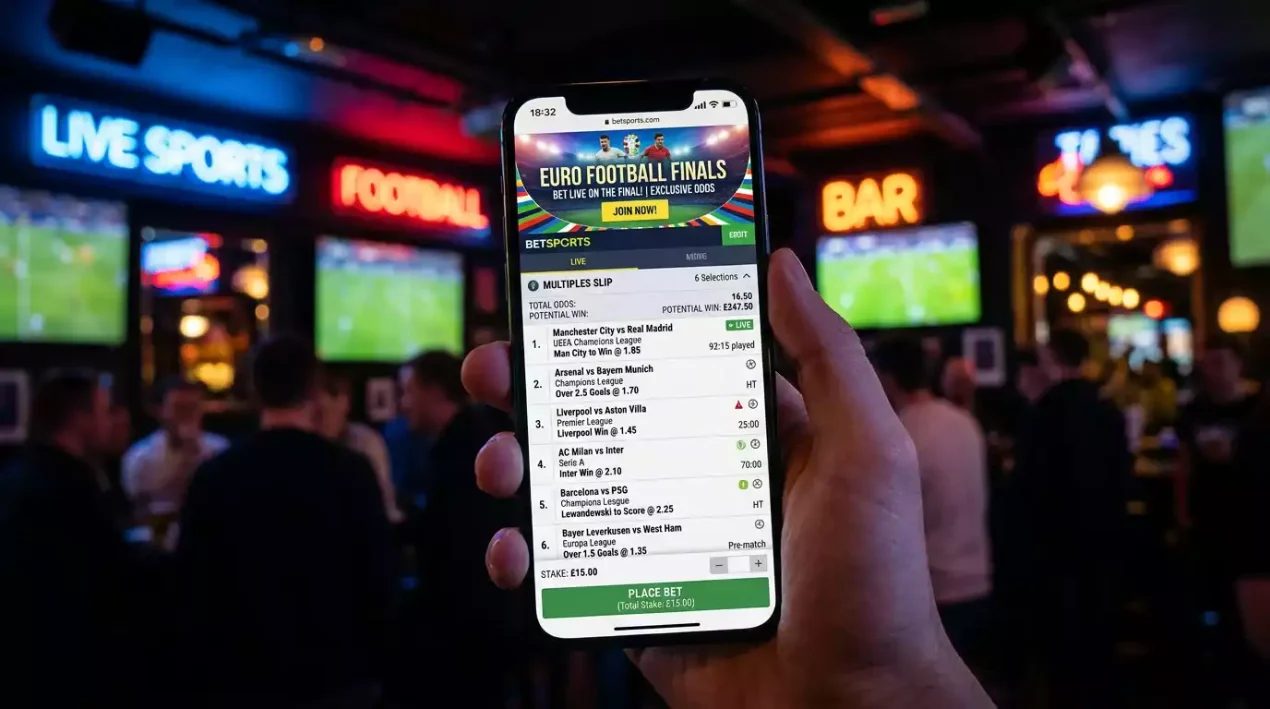
The UK’s remote online gambling market generated 7.8 billion pounds in gross gambling yield in the year to March 2025, a 13.1 percent increase from the prior year. A meaningful share of that growth was driven by promotional offers designed to increase betting frequency and total turnover. Understanding how these offers work — and what they actually cost — is as important as understanding the odds on the fight.
UFC Accumulator Bets: Sportsbook Acca Insurance Conditions
Acca insurance is a promotion that refunds your stake (usually as a free bet) if your accumulator loses by one leg. The typical structure: place a four-leg or more parlay at minimum odds per leg (commonly 1.20 or higher), and if exactly one selection lets you down, receive a free bet equal to your original stake, up to a specified maximum.
The refund mechanism matters. Most operators return the insurance as a free bet token rather than cash. Free bet tokens are “stake not returned” — if you use a 10-pound free bet at odds of 3.00, you receive 20 pounds in profit, not the 30 pounds you would receive from a normal 10-pound bet at the same odds. The difference is the 10-pound stake, which the operator retains. This means the insurance is worth roughly the expected profit from the free bet, not the face value of the token.
The qualifying conditions further reduce the value. Minimum legs (usually four), minimum odds per leg, and exclusions on certain markets mean the accumulator must meet specific criteria. If any leg falls below the minimum odds or the market is excluded, the entire insurance is void. I have seen bettors lose acca insurance payouts because one leg of their parlay was on a fighter at 1.18 when the minimum was 1.20. Reading the terms before building the acca is not optional.
The genuine value of acca insurance is conditional. It is positive when you were going to place the accumulator anyway and the insurance criteria align with your existing selections. It is neutral or negative when you alter your accumulator to qualify — adding legs you do not want, adjusting selections to meet odds thresholds, or increasing your stake because the insurance makes you feel protected. The insurance works best when it changes nothing about your betting behaviour except the downside on a bet you had already decided to make.
Money-Back Specials: KO-in-Round and Similar
Money-back specials are fight-specific promotions that refund your stake (again, usually as a free bet) if a specified event occurs. Common UFC versions include: “money back if your fighter loses by KO in round one,” “money back if the fight goes to a split decision,” or “money back if there is a disqualification.” The trigger event is typically something relatively unusual — a DQ, a specific round finish, a medical stoppage — that the operator prices as low-probability but high-drama.
Roughly half of UFC fights in 2025 ended by decision, and the rest were split between knockouts and submissions. The probability of any single specific trigger event — a KO in exactly round one, for instance — is usually between 5 and 15 percent depending on the fighters. The money-back special is essentially a free option on that low-probability event: if it happens, you get your stake back. If it does not, you lose normally.
The value depends on two things: how likely the trigger event is and how much the free bet refund is worth after wagering requirements. If a money-back special triggers 10 percent of the time and the free bet refund is worth 60 percent of face value (after the stake-not-returned mechanic and any wagering requirements), the expected value of the special is roughly 6 percent of your stake. On a 10-pound bet, that is 60p in expected value — genuinely positive, but not life-changing.
Calculating the Real Value of These Offers
Every betting promotion has a calculable expected value, and the formula is the same regardless of the offer type: the probability of the promotion triggering, multiplied by the true value of the refund (after all terms and conditions), equals the expected benefit.
For acca insurance on a four-leg UFC parlay: the probability that exactly one leg loses depends on the individual leg probabilities. If each leg has a 70 percent chance of winning, the probability of exactly one losing is roughly 24 percent. If the free bet refund is worth 60 percent of face value, the expected insurance value is 0.24 x 0.60 = 14.4 percent of your stake. That is meaningful — on a 10-pound acca, the insurance adds roughly 1.44 pounds in expected value.
The bookmaker’s average margin on UFC moneylines sits at about 4 percent, and the margin on parlays compounds with each leg. On a four-leg parlay, the effective margin can exceed 15 percent. Acca insurance at 14.4 percent expected value almost — but not quite — offsets the compounded margin. This is not a coincidence. The insurance is designed to bring the effective cost of the parlay close to the cost of individual bets, making the parlay feel like a fair proposition when it otherwise would not be.
For money-back specials, the calculation is simpler: trigger probability multiplied by refund value. If the trigger probability is 8 percent and the refund is worth 50 percent of face value (a free bet with tight terms), the expected benefit is 4 percent of your stake. This is equivalent to betting on a moneyline at approximately zero margin — positive, but only if you were going to place the bet regardless of the special.
The critical variable in every calculation is whether the promotion changes your behaviour. If you place a bet you would not otherwise place because a money-back special makes it feel “safe,” the expected cost of the unwanted bet (the margin on a selection you have no edge on) will almost always exceed the expected benefit of the special. The promotion has done its job — it has generated turnover that would not otherwise exist. For a complete overview of how UFC promotional offers, free bets, and welcome bonuses are structured across UK operators, the free bets guide covers the full landscape.
The Offer Is the Hook, Not the Fish
Acca insurance, money-back specials, and enhanced odds exist to solve a business problem: how to generate more betting volume from existing customers. They solve it effectively. The expected value is usually slightly positive for the bettor who would have placed the bet anyway, and significantly negative for the bettor who alters their behaviour to chase the offer. The distinction between those two bettors is the entire economics of promotional gambling. Be the first one.
Is acca insurance on UFC parlays actually worth using?
Acca insurance is genuinely positive expected value when you were going to place the accumulator anyway and the insurance criteria align with your existing selections. The expected benefit is typically 10 to 15 percent of your stake on a four-leg parlay, which partially offsets the compounded margin on multi-leg bets. It becomes negative value when you alter your accumulator to qualify — adding unwanted legs or adjusting selections to meet minimum odds requirements.
How do money-back specials on UFC KOs really work?
A money-back special refunds your stake as a free bet if a specified event occurs — for example, if your fighter loses by KO in round one. The refund is typically a free bet token (stake not returned), meaning it is worth less than the face value. The expected benefit is the trigger probability multiplied by the true value of the refund after terms. On a typical UFC money-back special with an 8 to 10 percent trigger probability, the expected benefit is roughly 4 to 6 percent of your stake.
This material was created by the OCTAEDGE team.
Related posts

Young People and MMA Gambling in the UK: Statistics, Risks, and Protections
UFC Betting Cash Out: How Early Settlement Works and When to Use It